
Who runs Rethink & Reuse
An editorial resource for UK households trying to cut waste and give everyday items a second life, written and kept current by the people behind this site.
Most zero waste advice is either too vague or tied to a sale
We wanted a place that says clearly what helps, what does not, and when a swap is not worth the effort.
Rethink & Reuse is an editorial resource for UK households trying to cut waste and give everyday items a second life. We write practical guides, not sales pages. There is no shop behind this site and no brand pushing you toward a product. The aim is to explain what actually works in a normal home, from zero waste living basics to simple upcycling projects.
That means admitting when a popular idea is more hassle than it is worth. Honesty is more useful than a long product list, so where a swap only works in a big house with a garden, we say so before you spend anything. When a method depends on your council's rules or the size of your kitchen, we say that too.
Guides here are written for people searching for a low waste home guide that holds up on a wet Tuesday, not a lifestyle spread. If a tip needs equipment you would have to buy, we say what it costs in effort as well as money, and whether it is worth starting with.
Where a subject is genuinely contested, we explain both sides rather than picking the tidier answer. The test we apply to every page is simple: could someone in a one-bedroom flat act on this today, without buying a kit or rearranging their week?
Every guide starts with a real problem
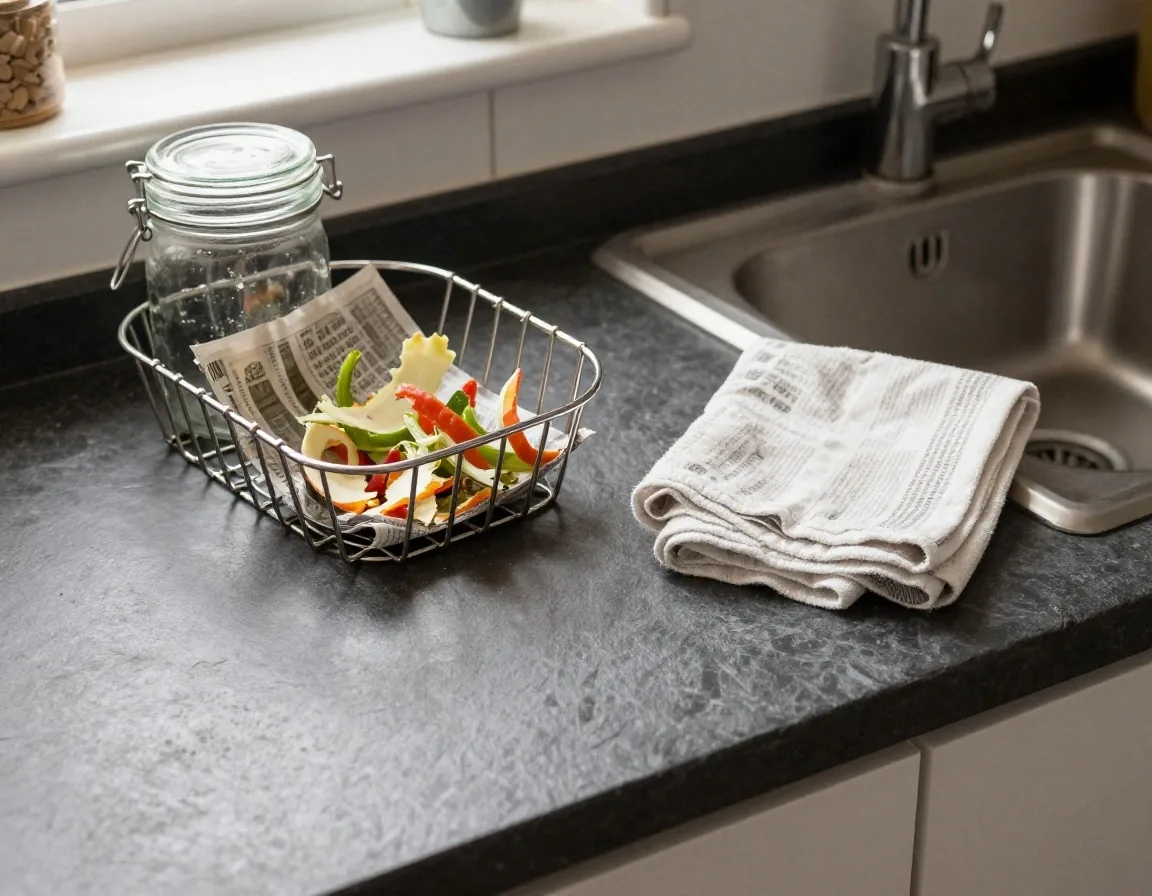
A full kitchen caddy, a wardrobe of unworn clothes, a cupboard of jars with nowhere to go. We ask what a UK household can realistically do about it, whether that is a rented flat with two cupboards or a terrace with a back yard.
Then we check the parts that break in practice. Reusable produce bags only help if you actually remember them, so our reusable produce bags guide covers where to keep them. Beeswax wraps usage and care depends on how warm your kitchen gets, so we explain what shortens their life. Composting food scraps at home works differently on a balcony than in a garden, and we write for both.
Council rules vary across the UK, so anything that depends on your local collection we mark as something to check. We do not invent statistics or cite studies we cannot point you to. Where a claim is uncertain, the guide says so rather than rounding it up into a confident number.
Food waste and the kitchen
Zero waste kitchen swaps, plastic free food storage, eco friendly kitchen cleaning and ways to reduce household waste before it reaches the bin. Swaps that survive a shared kitchen and a small fridge.
Shopping and everyday items
Sustainable shopping tips, how to buy in bulk without waste, plastic free alternatives and the upcycling vs recycling difference explained in plain terms so you know which option actually fits.
Making things last
Creative upcycling ideas, how to upcycle glass jars, repurposing old clothes and upcycled home decor DIY that uses what you already own. Repair over replacement, habits over purchases.
A narrow set of subjects, covered properly
We stay inside zero waste and upcycling because that is where we can be genuinely useful.
If we mention a product type, it is to explain how it works and what to look for, never because someone paid for the mention. We do not run a marketplace, take payment for placement, or list sponsored kit as a recommendation.
Kitchen & home swapsZero waste starter kit
Where to begin, and what you can safely leave out of the first month
Composting and food waste at home
Caddy habits, balcony bins, and what your council collection changes
Simple upcycling projects
Jars, clothes and furniture that are worth holding on to
Sustainable shopping and buying in bulk
Refills, loose goods, and when a bulk buy is the wrong call
Upcycling vs recycling
The difference, and how to choose between reusing an item and recycling it
Habits before purchases, repair before replacement
We prefer habits over purchases and repair over replacement. Before recommending a swap, we ask whether the change needs anything bought at all. Often the useful step is where you keep something, not what you own.
We flag trade-offs instead of pretending every swap is a clear win. A reusable coffee cup helps only if it gets used hundreds of times; a refill station trip that involves a bus ride may cancel the benefit. Saying that clearly is more honest than a neat list of wins.
Where local rules differ, we tell you to check with your council rather than guess. Recycling accepted at kerbside in one London borough may be refused in the next. Our guides point at what to check and how to phrase the question.
The advice is meant to hold up over a year, not just look good in a photo. If a method only works for the first fortnight, we would rather say that than let you spend a weekend building a system you abandon in spring.

Written for UK homes, not showrooms
Flats, terraces and family homes
Small kitchens, shared bins and one cupboard for storage. Guides are tested against those constraints, not a purpose-built utility room.
Renters who cannot change fittings
No drilling, no new appliances, no landlord approval. Where a method needs a permanent change, we say so and offer the portable version instead.
Anyone new to low waste living
Zero waste tips for beginners that start with one change and hold for a month before adding the next, rather than a system to install in a weekend.
Households with limited space
If a method does not work in a small space, we say so rather than assume a garden, a shed or a garage you might not have.
If a guide is wrong or out of date, we want to know
Readers have pointed out changes to council recycling rules and better ways to manage small compost setups. Those notes change what the guides say, and we update them when the advice genuinely shifts rather than to look busy.
Send us a topic suggestionDescribe your setup
Tell us the type of home, roughly where you are collecting waste, and what you have already tried. The more specific the message, the easier it is to check.
We read and review
Every message gets read. If you are stuck on a specific problem, we will point you to the guide that fits, or consider writing a new one where nothing covers it.
The contact page is the place for questions and corrections
Whether it is a question about a kitchen swap, a topic you would like covered, or an error you have spotted, the contact page reaches the people who write the guides. There is no call centre and no form that disappears into a queue.
- Post
- 42 Bramley Road, London, N14 4HD, United Kingdom
- [email protected]
- Phone
- +44 20 7946 0821
- Office hours
- Monday to Friday, 9:00 AM – 6:00 PM. Saturday, 10:00 AM – 2:00 PM.
Start with the guide that fits your home
No purchases, no sign-up. Read the starter guide, then read the one page that matches the room you are actually stuck in.